Not all compost behaves the same way once it hits the field. Two piles can look identical, dark, crumbly, and earthy smelling, yet perform in completely different ways once they are worked into soil. One feeds your crop and builds lasting organic matter. The other ties up nitrogen, stalls plant growth, and leaves you wondering why your yields did not respond the way you expected.
The difference almost always comes down to two things: compost maturity and the carbon-to-nitrogen ratio, often written as the C:N ratio. Understanding both is one of the most overlooked skills in regenerative agriculture, and it is central to how compost and soil carbon actually interact once material is applied.
What the Carbon-to-Nitrogen Ratio Actually Measures
Every organic material, whether it is straw, manure, food scraps, or wood chips, contains a mix of carbon and nitrogen. The C:N ratio simply describes how much carbon exists for every unit of nitrogen in that material.
High-carbon materials like dry leaves, straw, and sawdust often carry ratios of 60:1 or higher. High-nitrogen materials like fresh manure or grass clippings can sit closer to 15:1 or even lower. Finished, stable compost generally settles somewhere between 15:1 and 20:1, which mirrors the ratio found in healthy topsoil.
This number matters because soil microbes need both carbon and nitrogen to survive. Carbon is their energy source. Nitrogen is what they use to build proteins and reproduce. When the ratio is out of balance, microbial activity either stalls or goes into overdrive, and either outcome affects your crop.
Why an Immature Compost Can Hurt More Than It Helps
Compost that has not fully broken down still carries a wide C:N ratio, often well above 30:1. When this material is incorporated into soil, the microbes that decompose it need extra nitrogen to keep working. Since there is not enough nitrogen in the material itself, those microbes pull it directly from the surrounding soil.
This is called nitrogen immobilization, and it is one of the most common reasons growers see stunted, yellowing crops after applying compost that was spread too early. The soil is not actually short on nitrogen in the long run, but the nitrogen that is present becomes temporarily locked inside microbial biomass instead of being available to roots.
This same dynamic connects closely to what we cover in soil carbon after tillage, where disturbing soil and adding raw organic matter at the same time can compound nutrient tie-up rather than solve it. Timing and material readiness both matter as much as the practice itself.
What Compost Maturity Actually Means
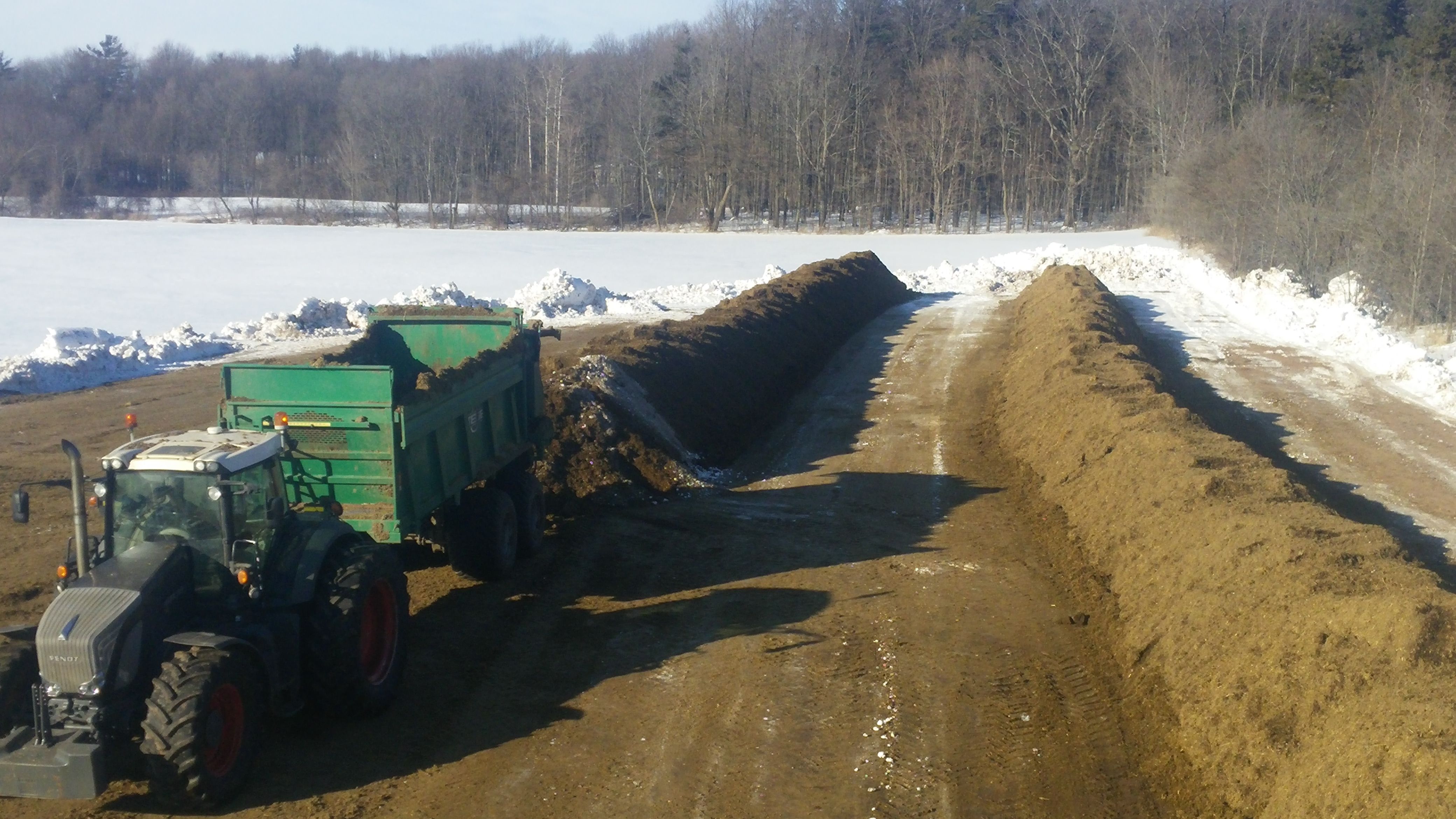
Maturity describes how far along the decomposition process has gone. An immature compost still contains recognizable plant fragments, may generate heat when handled, and often carries a sour or ammonia-like smell. Mature compost, by contrast, is dark, has an earthy aroma, holds together loosely without smearing, and no longer heats up when turned or piled.
Maturity is not just about appearance. It reflects a shift in the microbial community itself. Early in the composting process, fast-growing bacteria dominate and break down the easiest carbon sources first. As those simple sugars and starches are consumed, the population shifts toward fungi and slower-growing organisms that specialize in breaking down more resistant, complex carbon compounds. This second stage is where stable humus begins to form, which is the fraction of organic matter that actually persists in soil for years rather than weeks.
This is the same biological shift we describe in what changes first when soil biology starts working, where fungal-to-bacterial balance is one of the earliest indicators that soil health is improving.
Simple Ways to Judge Compost Before You Spread It
You do not need a laboratory to get a rough read on compost quality, though lab testing is always the most reliable option before large-scale application. A few field checks can tell you a lot.
Temperature is one of the most reliable indicators. Take the internal temperature of a pile a few inches deep. If it still reads significantly warmer than the outside air, active decomposition is still underway and the material is not ready.
Smell is another clear signal. Finished compost should smell like forest floor or fresh soil. A sharp, sour, or ammonia smell usually means the pile is still actively breaking down or was not managed with enough oxygen during the process.
Texture also tells a story. Mature compost crumbles easily and does not clump into a slick, sticky mass when squeezed. If you can still identify individual leaves, stems, or bedding material, the pile likely needs more time.
A simple bioassay can also help. Mixing a sample of compost with potting soil and germinating a few fast-growing seeds, like radish or cress, is a low-cost way to check for phytotoxicity. Poor germination or stunted seedlings suggest the compost is still releasing compounds that can harm young plants.
How the Right C:N Ratio Supports Long-Term Carbon Sequestration
Compost that finishes near the 15:1 to 20:1 range does more than avoid nitrogen tie-up. It also integrates into soil in a way that supports durable soil carbon sequestration rather than a short-lived nutrient flush.
Material that is too high in carbon takes longer to stabilize and can continue drawing down soil nitrogen for months. Material that is too high in nitrogen tends to mineralize quickly, releasing nutrients in a fast pulse that is easily lost to leaching or volatilization rather than being retained in stable organic matter. A properly balanced, fully matured compost sits in the middle, feeding soil biology at a pace that supports both nutrient availability and long-term carbon storage.
This balance is also what allows compost to improve soil texture and carbon retention over time. Stable organic particles bind with mineral soil components to form aggregates, which is the physical structure that protects carbon from being lost back to the atmosphere.
Where Living Carbon Fits Into This Picture
At Carbon Cycle Consulting, our Living Carbon products are built around this exact principle. Rather than applying raw or partially finished organic material, we focus on compost that has completed the maturation process and carries a stable, biologically active C:N ratio suited to field conditions. This is part of what separates a compost-based solution for regenerative soil health from simply spreading whatever organic material happens to be available.
The goal is not just adding organic matter to a field. It is adding organic matter that is ready to function as a long-term carbon and biology input rather than a short-term nitrogen drain. That distinction shows up clearly in outcomes like the one documented in our case study on Living Carbon and yield response, where properly finished compost translated directly into measurable field performance.
Timing Application Around Maturity
Even a well-finished compost benefits from thoughtful timing. Applying compost several weeks ahead of planting gives soil biology time to integrate the material before roots need to draw on available nitrogen. This is closely related to the guidance we cover in tillage timing, microbes, and moisture, where the interaction between soil disturbance, moisture conditions, and microbial activity determines how quickly a soil amendment becomes usable to a growing crop.
Cooler, wetter conditions slow microbial breakdown, so compost applied in early spring may need more lead time than compost applied to warm, active soil in late summer. Matching application timing to both compost maturity and seasonal soil conditions reduces the risk of the nitrogen tie-up described earlier in this article.
A Practical Checklist Before Your Next Application
Before spreading compost on productive acres, it is worth confirming a few basics. Check that the pile temperature has dropped close to ambient air temperature and stayed there for several days. Confirm the material has an earthy smell rather than a sour or ammonia odor. Look for a loose, crumbly texture without recognizable feedstock fragments. If possible, run a quick germination test or send a sample for a lab-based C:N analysis, particularly before large or first-time applications on a new field.
These checks take very little time compared to the cost of a stunted stand or a season of tied-up nitrogen, and they help ensure that compost is doing what it is meant to do, building soil rather than borrowing from it.
Final Thoughts
Compost maturity and the carbon-to-nitrogen ratio are not abstract lab concepts. They are practical, field-level factors that determine whether an application supports your crop or competes with it for nutrients. A properly finished, well-balanced compost feeds soil biology at a sustainable pace, supports the kind of aggregate structure that protects long-term carbon storage, and avoids the nitrogen immobilization that comes from spreading material too early.
If you are evaluating compost sources or want a second opinion on material you are already using, our soil health consulting team can help you test, interpret, and time applications correctly for your specific fields.
Frequently Asked Questions
What is a good carbon-to-nitrogen ratio for finished compost?
Most finished, stable compost falls between 15:1 and 20:1, which closely matches the ratio found in healthy agricultural topsoil. Ratios significantly above this range usually indicate the compost has not fully matured.
How long does it take compost to reach full maturity?
This depends heavily on the feedstock, moisture, and turning frequency, but most well-managed compost piles need at least two to four months to fully stabilize. Poorly managed or low-oxygen piles can take considerably longer and may never fully mature without intervention.
Can immature compost still be used safely?
Immature compost can be used, but it should be applied well ahead of planting, ideally in the fall for spring crops, or supplemented with additional nitrogen to offset temporary immobilization. Applying it directly at or near planting time carries the highest risk of nutrient tie-up.
Does a lower C:N ratio always mean better compost?
Not necessarily. A ratio that is too low, often from compost dominated by manure or nitrogen-rich feedstocks, can mineralize too quickly and lose nutrients to leaching or volatilization before crops can use them. Balance, not just a low number, is what supports both nutrient efficiency and long-term carbon retention.