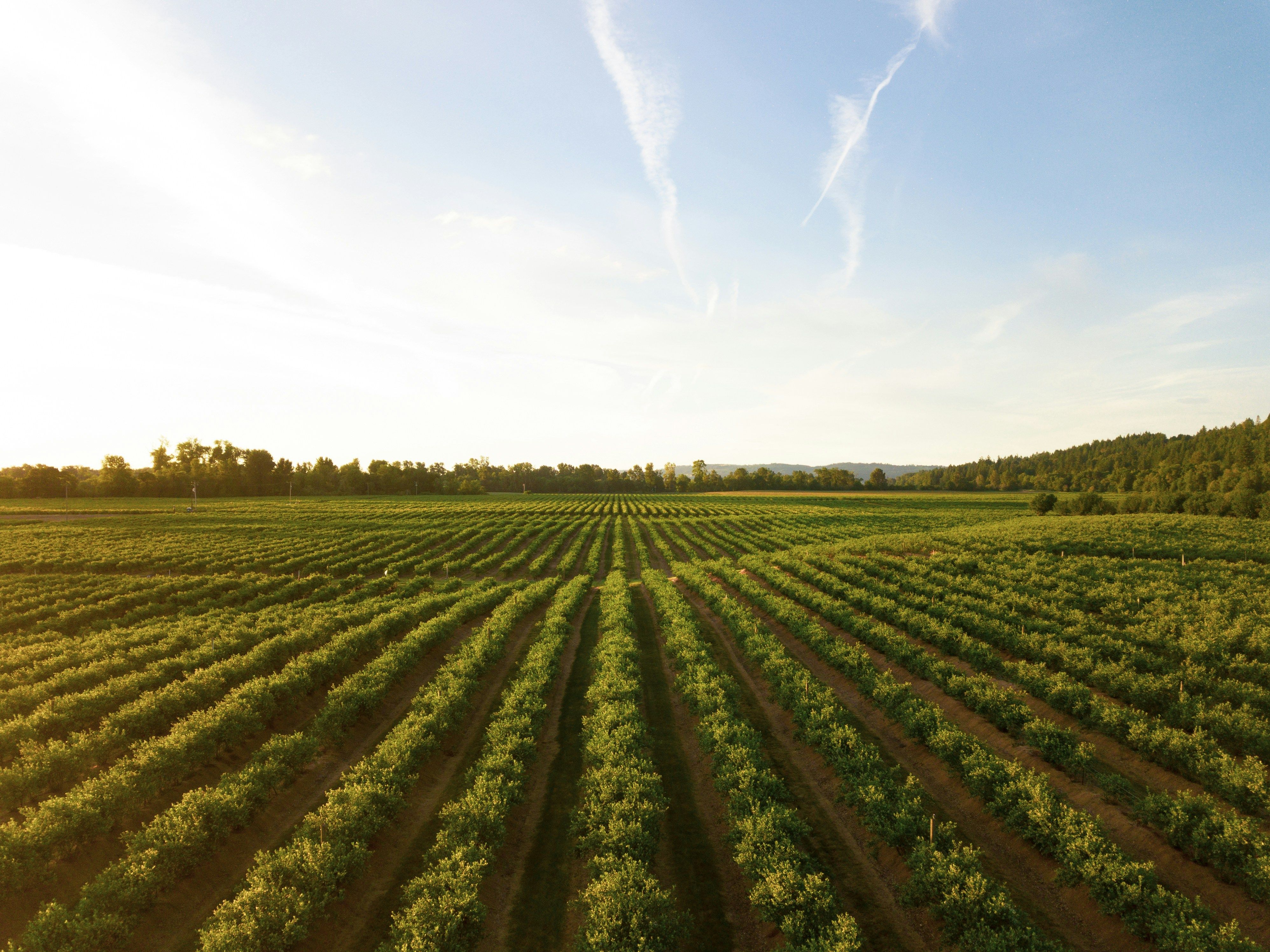
To learn how to improve clay soil, add stable organic matter, feed soil biology and reduce disturbance so the tiny clay particles bind into crumbs instead of packing into a dense layer. In practice that means applying mature compost, keeping living roots in the ground as much of the year as possible, limiting heavy traffic on wet fields, and cutting back tillage that breaks apart the structure you are trying to build. Clay itself is not the problem. Clay holds nutrients and water well. The problem is poor structure, which management can change over time.
Why Does Clay Soil Become Compacted?
Clay-rich soils can become compacted when machinery or repeated traffic compresses the soil, especially under wet conditions. Clay soils may contain substantial total pore space, but much of it consists of very small pores that restrict water movement and aeration. Compaction can further reduce the larger, connected pores needed for drainage, oxygen movement, and root growth. For related reading, see our article on soil aggregates and farm water efficiency.
Several common field conditions push clay toward compaction:
- Equipment traffic on wet soil. Heavy axle loads press clay particles together and raise bulk density, which is the weight of soil in a given volume.
- Repeated tillage at the same depth, which can smear and seal the layer just below the tillage zone.
- Low organic matter. Without carbon to feed microbes and bind particles, aggregates break down and the soil settles into a dense mass.
- Bare ground over winter. Upper Midwest freeze-thaw cycles open some cracks, but bare clay slumps and crusts again once spring rain hits it.
Compaction is also biological. When pore space closes, oxygen drops, and the fungi and bacteria that produce the sticky compounds holding aggregates together become less active.
How Does Compost Improve Clay Soil?
Compost can improve clay soil by contributing organic matter that supports microbial activity and helps stabilize soil aggregates. Better aggregation can create more connected pore spaces, improving water infiltration, aeration, and root growth over time. Compost does not change the soil's basic texture or instantly remove compaction. Results depend on compost quality, application history, soil conditions, and ongoing field management.
Organic Matter Binds Particles Into Aggregates
Organic compounds produced during decomposition, together with root activity and microbial processes, help bind mineral particles into stable soil aggregates. Soil chemistry, including calcium and other exchangeable cations, can influence whether clay particles stay dispersed or form stable associations. Well-aggregated soils hold a mix of small and large pores. Smaller pores retain water, while larger connected pores support drainage, air exchange, and root movement.
Biology Builds and Maintains Structure
Compost supports microbes, roots and soil organisms that help bind particles into stable aggregates. Bacteria produce sticky compounds, fungal strands wrap around particles, and earthworms leave open burrows behind. Those aggregates are more likely to keep their pore structure through rainfall than loose clods.
What Makes the Best Compost for Clay Soil?
For clay soil, select mature, stable compost supported by laboratory testing. Review its carbon-to-nitrogen ratio, nutrient content, moisture, pH, and electrical conductivity (EC), which indicates soluble salt levels. Where available, compost stability or seed germination results add information about maturity.
A low carbon-to-nitrogen ratio alone does not prove that compost is fully mature. Compare the compost analysis with your soil test, crop requirements, and nutrient management plan before setting a rate. For more information, read our guide to high-quality compost and soil structure. Farms considering their own composting facilities can also explore On-Farm Compost Design.
Can Compost Improve Clay Soil Drainage?
Yes, compost can improve clay soil drainage, but it works through structure rather than texture. Adding compost does not turn clay into loam. What it does is create and stabilize the larger pores that let water move downward instead of ponding on the surface. Compost cannot solve every drainage problem. A high water table, a restrictive subsoil layer, or a missing drainage outlet may need management beyond compost and biology.
| Soil condition | Poorly structured clay | Well-aggregated clay |
|---|---|---|
| Water infiltration | Slow; water ponds or runs off | Faster; water enters through stable pores |
| Root growth | Shallow, flattened, sideways | Deeper, following pores and old channels |
| Spring field access | Stays wet longer; traffic risk is high | Dries more evenly; shorter wet window |
| Summer moisture | Hard and cracked; difficult for roots to use | More stored water within root reach |
How to Improve Clay Soil With Compost at a Suitable Rate
There is no single correct rate. The right amount depends on your soil test, the compost analysis, the crop, your nutrient management plan, and how degraded the field is. Over-applying compost can push nutrient levels higher than your plan allows, so rate decisions belong with your agronomist and your nutrient management requirements.
Building a Clay Soil Improvement Plan
Work through these steps in order.
- Identify the compaction problem. Use a spade to examine structure and roots, and a penetrometer when moisture conditions are suitable. Readings taken at very different moisture levels are not comparable. Record the depth of dense layers and restricted roots.
- Test the soil. Get a standard fertility test and, where useful, a biological test. You need a baseline for organic matter and nutrients before you add anything.
- Test the compost. Request maturity, carbon-to-nitrogen ratio, moisture, and nutrient analysis so you know what you are applying per ton.
- Set a rate within your nutrient plan. Match compost nutrients against crop removal and plan limits, then choose a rate you can repeat for several years.
- Apply when the soil can carry equipment. Avoid spreading on saturated clay. You can undo the benefit with the trip across the field.
- Add living roots. Follow compost with cover crops or extended rotations. Deep-rooted species open channels and feed microbes with root exudates, the sugars roots release into the soil.
- Re-check each year. Dig the same spots, watch how fast water soaks in, and track organic matter over several seasons rather than one.
What Practices Should Be Avoided?
Some common habits work directly against structure in heavy ground:
- Working or driving on wet clay, which can create a compacted layer that is difficult to correct.
- Tilling to break up compaction as a standing routine. Repeated passes burn organic matter and destroy the aggregates that prevent the problem.
- Adding sand to clay. At field scale this is impractical and can make the soil set harder rather than looser.
- Applying raw or immature material and expecting compost results. Use appropriate testing and nutrient planning before field application.
Reduced disturbance is not all or nothing. Many Upper Midwest operations work toward fewer and shallower passes while keeping the one tillage operation they genuinely need for cold spring soils or residue management.
Frequently Asked Questions
Improvement is gradual rather than immediate. It varies with soil texture, weather, crop rotation, compost quality and management history. Track infiltration, root depth and soil-test trends across multiple seasons instead of judging the change from a single year of field observations.
Compost adds organic matter and biology that support soil structure over time. Whether another amendment belongs in the plan depends on soil-test results and field conditions. Review your test with an agronomist before buying any product aimed at loosening heavy ground.
Cover crops can support clay structure through living roots and organic inputs. They may create root channels over time, but they may not correct severe or deep compaction, especially if wet-soil traffic continues. Pair them with traffic management and compost where soil testing supports it.
Apply when soil is firm enough to carry equipment without rutting, and avoid saturated ground. Timing should fit your crop schedule, your nutrient management plan, and any applicable local requirements, so confirm spreading windows with your agronomist before scheduling the work.
Both benefit, but for different reasons. Sandy soil needs organic matter mainly to hold water and nutrients. Clay already holds both, so organic matter for clay soil mostly works on structure, pore space and aeration. Target levels depend on your soil type and testing, not a universal number.
Ask the supplier for current documentation of compost maturity, carbon-to-nitrogen ratio, moisture, and nutrient content. Where available, stability or seed germination results add useful context. Use that analysis with your soil test and nutrient plan rather than judging compost by appearance alone.
Putting a Clay Soil Program Into Practice
Knowing how to improve clay soil comes down to a few repeatable decisions. Feed the soil carbon through mature compost, keep living roots growing as long as the season allows, stay off wet fields, and reduce tillage where your system can tolerate it. Measure progress with a spade, a soil test, and your own observations of how quickly water soaks in after a storm.
Carbon Cycle Consulting works with Wisconsin and Upper Midwest farms on compost systems, biological soil amendments and field-specific soil health consulting. To talk through the clay ground on your own operation, reach out through Carbon Cycle Consulting.